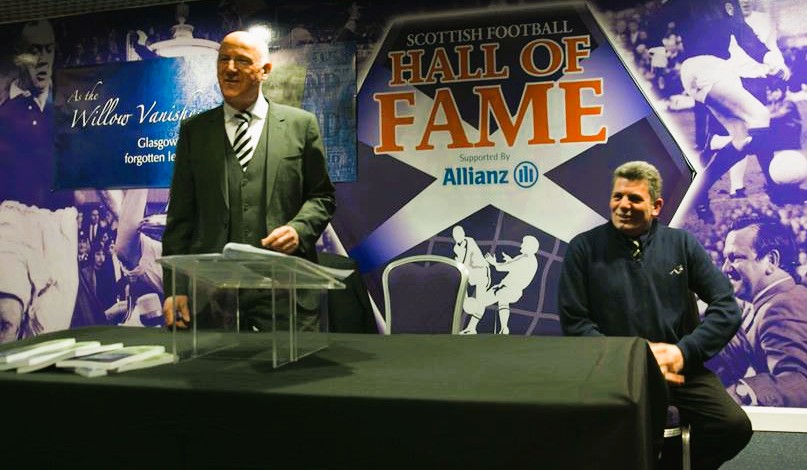
12 years ago today, Friday 4th April 2014, I was honoured to launch the book ‘As the Willow Vanishes’ at the Scottish Football Museum’s Hall of Fame at Hampden Park. My lifelong family friend, former teacher and Clydesdale cricket and football team-mate, the late Sandy Strang, presented the launch of the book.
Sandy had proof-read the book for me, written the foreword and had offered to front the launch at Hampden. It is only now, 12 years on, that I fully appreciate the prescience of Sandy’s words:
“an astonishing book about football. Or perhaps it’s a stunning football book about cricket.
There was much more to the birth and subsequent explosive rise of football in Scotland than mere football. There was cricket. Scottish cricket. Big Scottish cricket.
This is serious revisionist history. Cherished myths are debunked.
…..a must-read for all with even a passing interest in the origins of Scottish ’fitba’ and the social dynamics of nineteenth century industrial Scotland.
One thing’s for sure. Make no mistake. It’s an utter gem.”
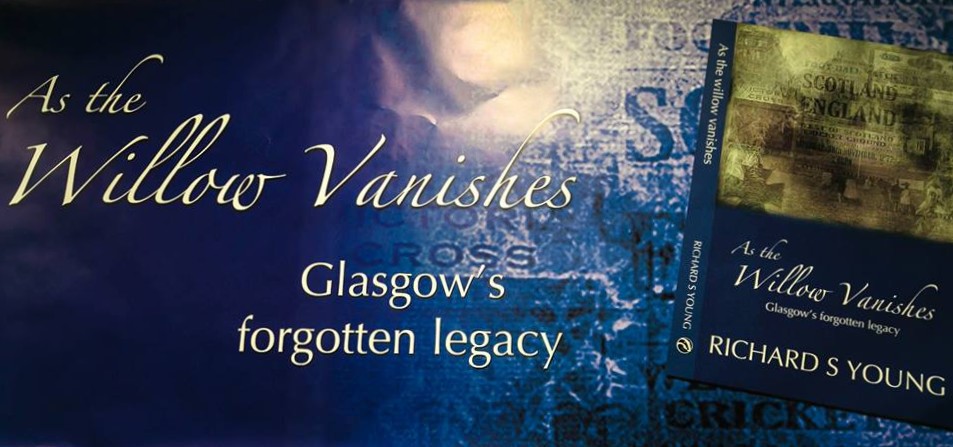
I had written ‘As the Willow Vanishes’ out of frustration at the denial by sporting historians of the true importance of the role that Victorian-era Scottish cricket, especially the actions of the Glasgow area clubs, had played in the creation of modern day association football and that, all around the world, roots can be traced back to Glasgow and the actions of its cricketers and like-minded souls.
They had lit the blue touchpaper for the rocket that orbited the world and brought association football to be now enjoyed by nearly 4 billion people in the 21st century.
I cannot express fully how indebted I am to Sandy’s help and assistance to get the project moving, but even he, like myself, would not have appreciated just how much ’As the Willow Vanishes’ has indeed changed perceptions, challenged prejudice towards a single sport and opened minds to “look to the past to find the answers to the future”.
The book has been a door-opener, and a discussion point that has allowed me, in the 12 years since its launch, to discover so much more of the role that the Victorian-era Glasgow area cricketers and their clubs have played in helping to create a global sporting phenomenon – association football. Presentations, interviews, newspaper articles, book launches, anniversary celebrations, tv appearances, meetings, football tours and events, #fitba150, opportunities and connections etc, and laterally, Football’s Square Mile, have all happened to me because of ‘As the Willow Vanishes’ and I need to continue telling the story.
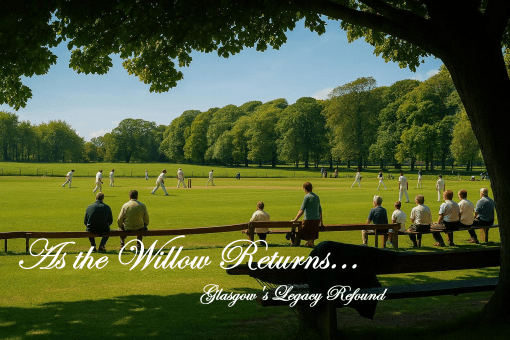
The sequel, ‘As the Willow Returns’ is near completion – it has taken a long time to compile the information, but it is worth the wait – it details the true extent of what Victorian-era Glasgow cricket is globally responsible for while I also personalise the content with recollections from my own life and experiences to further explain as to why my original frustration had to be resolved in the first place.
I will leave you an excerpt from ‘As the Willow Returns’ to savour as a taster of what is to come. It is purely coincidental that today, Saturday 4th April 2026, the Artemis II space capsule orbits the Earth and the moon as humanity prepares to commence lunar landings after an absence of over 50 years.
Or is it?
I’ll let you decide but thank you for all the support and assistance you have shown to me over the last 12 years.
Siggy
Excerpt from the forthcoming ‘As the Willow Returns’
Football’s Square Mile has certainly been an origin point for the explosion of association football as a sport both home and abroad, but it has also been the location of senseless violence leading to the ultimate sin – murder.
As a southsider of Glasgow, and one that spent his formative years either growing up or playing sport in football’s square mile, I have always had a fascination at the connectivity that I, or members of my family, have seemed to have attracted to some shocking crimes that have been committed in the area.
Just coincidence, but the same coincidence does make me wonder if other factors are at play. It may be that as a child I hoovered up information and conversations that I encountered and stored them away in the memory banks of my brain. They have lain there gathering dust as the years pass, and then suddenly, a happenstance occurs and something is unlocked from the stygian darkness of cerebral storage, and the ‘play’ button is depressed internally and a story from the past appears.
It was when I was helping to collate the histories associated with the 21 sites for Football’s Square Mile and the respective location designation information attached to each of them, I suddenly began to remember the darker tales that had played out at or near to many of the sites. Childhood experiences had led me to have knowledge of these tales and as I am now at retirement age and my golden years, I wonder at the reasoning for my mental retention allowing me to be in possession of these darker stories.
They are nothing more than a series of circumstances that seem weirdly personal but, at the same time, they are far too profound to be merely coincidental or by chance, and as such, have caused me to then have a whole series of questions with myself. Is it just merely serendipity that triggers the happenstance and randomness of being in possession of the knowledge of tragic events that happened close by and time has forgotten? Or perhaps, there is some form of sychronicity that plays out the coincidences? Or more simply put, are there factors beyond our grasp of comprehension that circumvent the laws of physics, perception, and reality that then deliver out improbable experiences and ‘coincidence’? I don’t know the answers, but there may be.
I can’t personally explain any of it apart from being nothing more than coincidence, but I am drawn to the writings of Ian Fleming, who, in 1959, divided his 7th James Bond novel ‘Goldfinger’ into three distinct parts: ‘Happenstance’, ‘Coincidence’ and ‘Enemy Action’. In the plot of the novel, James Bond interferes with the world domination plans of Auric Goldfinger, and after the third occasion, Goldfinger decides that enough is enough. If you have seen the film, you will know how it all plays out as a result of the following quote: “Once is happenstance, twice is coincidence, the third time it’s enemy action” and James Bond subsequently prevails as the hero, saves the world, wins the girl and nonchalantly saunters off to his next adventure.
I’m not so lucky in life but I’ll happily replace ‘enemy action’ with ‘unexplainable circumstance and interaction’.
When compiling the various anecdotes and stories together for the completion of ‘As the Willow Returns’, I couldn’t help but notice all the coincidences and connections that are stored within my memory, but I know that I am certainly not alone in having these experiences.
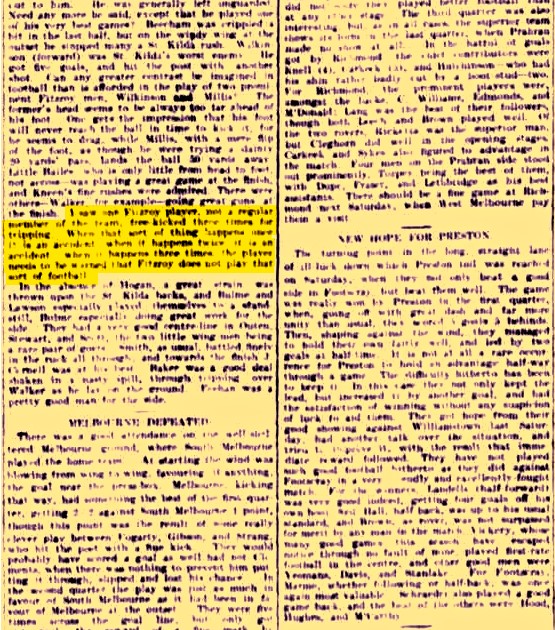
I was searching through the on-line Australian newspaper database, The Trove, and looking for football match reports that were contemporaneous with possible ‘Scotch Professors’ exploits in the southern hemisphere, and when trawling the Melbourne Argus football articles of Monday 10th July 1905, a passage in a neighbouring article about Australian Rules football caught my eye:
“I saw one Fitzroy player, not a regular member of the team, free-kicked three times for tripping. When that sort of thing happens once it is an accident when it happens twice, it is an accident when it happens three times, the player needs to be warned that Fitzroy does not play that sort of football.”
The similarity to the Ian Fleming quote of over 50 years later is evident but the passage also reminded me of what was instilled into the mindsets of young cricketers at Clydesdale nearly 50 years ago. You were made to respect the game and its laws but you were also made conscious of the club you were playing for and representing – yes, you were a member of Clydesdale Cricket Club and paid a subscription to be so, but the obligations and responsibilities that were expected of you to portray to allow you, to enable you, to be a member of that club was repeatedly ingrained into you.
Time, society and operational aspects have moved on since then but, the consequences of cancellation as a member and as a cricketer back then created an inner fear that forced one to have a respect on how you were expected to behave, on and off the field of play, and that has remained very much a part of me ever since – everything has to be fair and equitable for all involved and not open to manipulation for personal furtherance.
I have strived all my adult life to project that concept – if people think differently of me, fair enough, but the old cricket adage “look in the book chief!” does apply – actions are far greater than words or thoughts.
But back to the unexplainable happenstance, coincidence and circumstance aspects that captured my attention. There are far too many that occur near to a number of football square mile locations. Maybe it is just me, and I associate personal events and their developing situations from my memories with these locations and time has made these associations coincidental.
The Pollokshields Triangle
It was August 1971, and the world had been gripped by the lunar adventures of the Apollo 11 crew and their landing on the moon in July 1969 and the various missions thereafter. The subsequent drama of the Apollo 13 mission had captivated audiences around the world and the following success of the Apollo 15 mission in 1971 had triggered a global interest in man’s adventures into space.
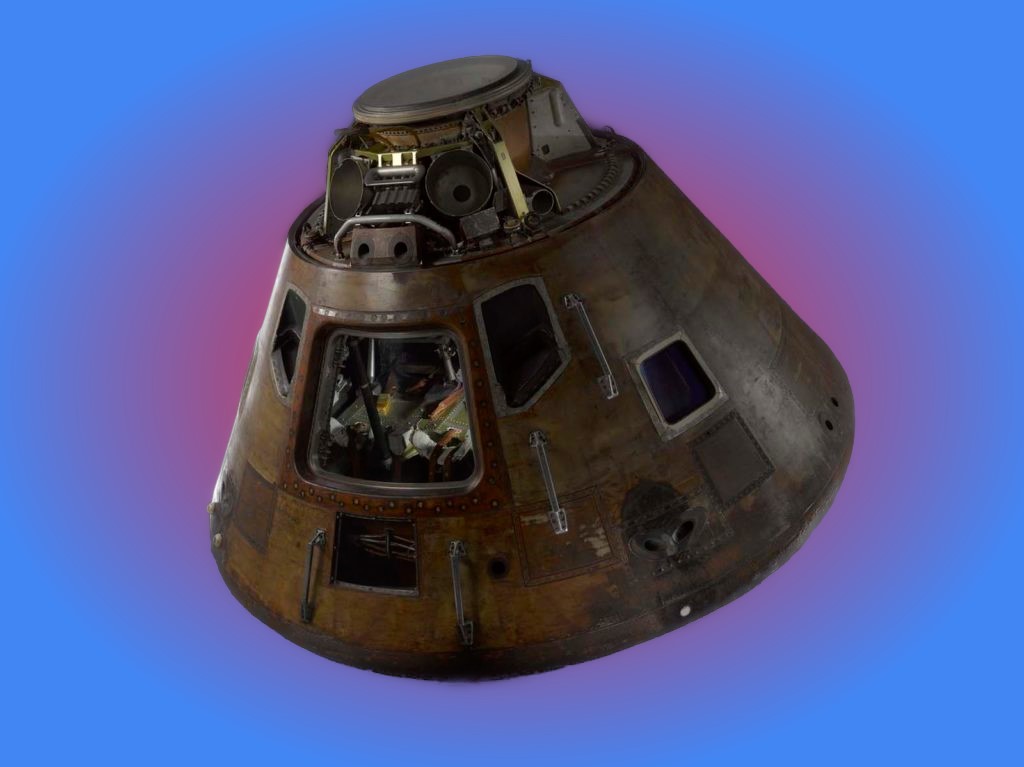
Space-fans in Glasgow were being treated with a rare opportunity to see the command module of the 1969 Apollo 10 mission. That mission, crewed by Thomas Stafford, Eugene Cernan and John Young, had orbited the moon in the flight preceding the historic landing by Neil Armstrong and Buzz Aldrin. The success of Apollo 11 was owed to the previous missions that had been undertaken but the dress rehearsal by Apollo 10 in May 1969 paved the way for the brilliant execution of the first manned moon landing some two months later.

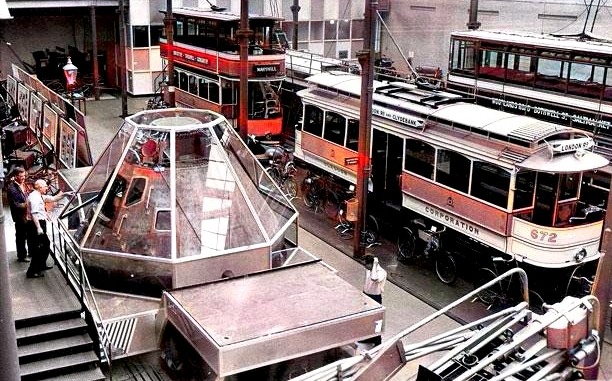
Glasgow’s Museum of Transport, then in Albert Drive, Pollokshields, hosted a six-day display of the Apollo 10 Command Module, together with an Apollo 11 sample of moon rock. The demand to see both items was so great that queues stretched around the building and up Albert Drive. Apparently 56,137 people visited the museum in those six days, and I was one of them.
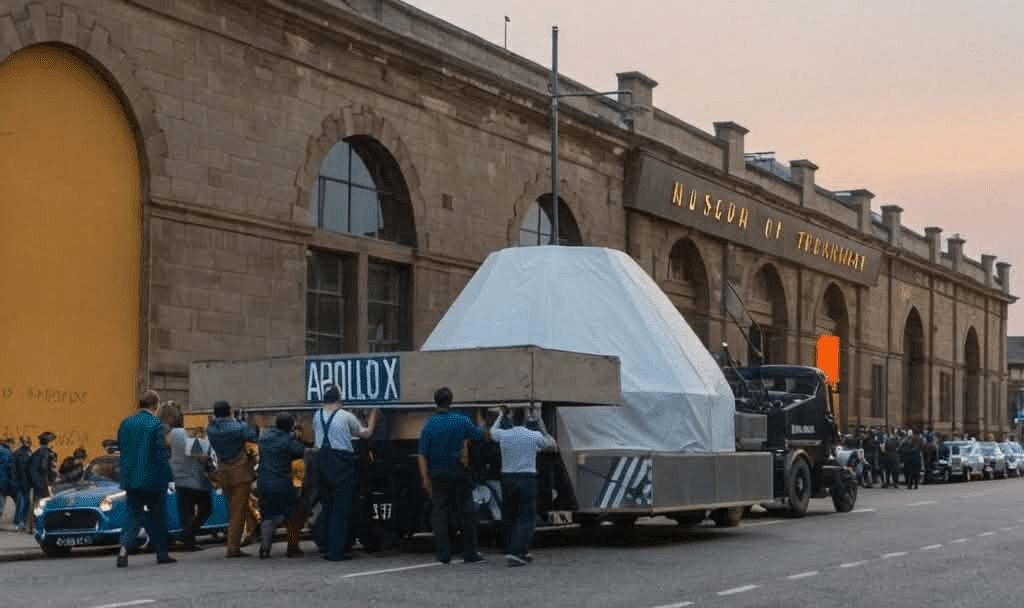
My memory as a near 6-year-old is standing for hours with my mother and elder brother Eric and having a combination of impatience and excited anticipation as the queue slowly trudged nearer and nearer to the museum.
Conversations were going on amongst the adults along the queue, and I remember clearly my interest being piqued as we were yards from the entrance to the museum. We were standing on the road/railway bridge part of Albert Drive at Pollokshields East Railway Station and there was a discussion going on amongst various adults about a Charles Templeman Brown and the murders committed inside the station years previously. The phrase that caught my attention was “the most callous and senseless murders ever committed in Glasgow”. I recall being told to “shoosh” because I kept asking my mother what callous meant.
The first of the ‘happenstance, coincidence and unexplainable circumstance and interaction’ events that I can recall begins within my young mind…
On the Monday 10th December 1945, three railway workers were huddled around a roaring fire in the stationmaster’s office between the arrivals of trains at the station. At 10.00pm, the stationmaster’s office door was burst open and a tall slim man wearing a light-coloured raincoat and brown felt hat stood in the doorway. He had a gun in his right hand. Clerkess Annie Withers, clerk-porter William Wright and junior porter Robert Gough jumped up in alarm and Annie began to scream. The gunman shot her in the body then shot her again as she lay on the floor. The gunman then turned around and shot 15-year-old Robert in the arm then shot him in the stomach. William Wright turned to flee, and a bullet grazed his body. He lay on the floor motionless as the gunman then opened the safe and removed two tin boxes containing the sum of £4. 3s. 8d (the equivalent buying power of £4.19p in 2026 money) and made his escape.
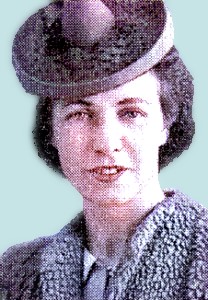
William Wright telephoned the nearby Pollokshields East signal box for assistance as a train pulled into the station. Wright tried to explain to the train guard what had just happened, but the guard did not believe him and signalled for the train to depart. Police officers and ambulance crews arrived a few minutes later and a gravely wounded Annie Withers was stretchered out of the station into an ambulance but sadly passed away en-route to the nearby Victoria Infirmary. Robert Gough was also taken to the Victoria Infirmary with a serious stomach wound, but he also passed away on Wednesday 12th December 1945. Robert had been able to provide police with a dying deposition of events and had given a description of the assailant. William was taken to police headquarters and gave a detailed statement about the events of the evening of the 10th of December.
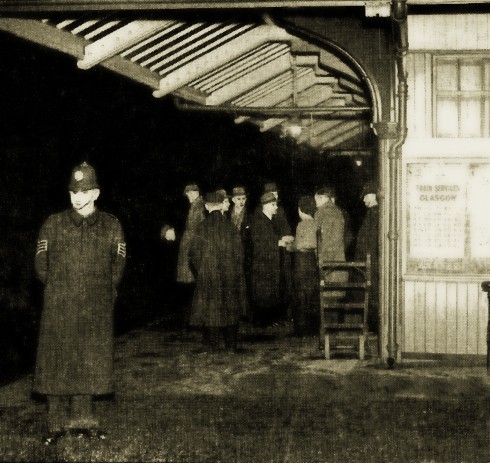
Police detectives and uniformed officers conducted a massive search of the railway station, railway tracks and surrounding streets for clues as to the murderer’s escape route or recovery of the firearm. None were found and there were no other eyewitnesses due to the remoteness of the station, the time of the incident and that it had been a particularly cold and misty evening.
Police forensics established from the discarded shell casings at the scene that six shots had been fired from a 9mm German Luger semi-automatic pistol. Fingerprints had also been lifted from the stationmaster’s office for comparison purposes.
However, despite having an eye witness to the murders and a large amount of forensic evidence to draw upon, the police were unable to make an early arrest for this crime, and their respective avenues of enquiry had all run cold. The initial public interest of shock and horror dissipated in the following months and the newspaper interest in solving this crime eventually waned. Then, in October 1946, an anonymous tip was made to the Craigie Street Police Station that a 20-year-old man called Charles Templeman Brown who lived in Brisbane Street in the nearby Battlefield area was in possession of a gun matching the description originally given out by the police in the previous December.
Officers were dispatched to the address in Battlefield to discover that Brown was working away as a fireman on a train between Glasgow and Carlisle. The officers left a message with Brown’s mother asking him to make contact on his return. Brown returned home on 9th October and panicked when told that the police were looking for him. Having previously dismantled the gun into pieces, he reassembled it and tried to commit suicide, but the weapon jammed and he couldn’t get the gun to fire.
Not knowing what to do, Brown approached a policeman at the junction of Newlands Road and Clarkston Road, Constable John Byrne, and said ‘Will you phone the Central for me – I did a murder”. When the policeman asked what murder he meant, Brown replied “The Pollokshields job”. Constable Byrne, fully aware of the railway murders, cautioned Brown and escorted him to the nearby police signal box in Spean Street at Holmlea Road. When Constable Byrne advised Brown that he was going to conduct a body search of him, Brown simply said, “You might as well have it” and handed over the Luger pistol and a box of ammunition.
Brown went on trial at Glasgow High Court on Tuesday 10th December 1946, one year to the day of the murders. William Wright, the surviving railway porter, identified Brown as the gunman who shot his two colleagues while the presented forensic evidence confirmed Brown’s fingerprints on the handle of the safe. The ballistic evidence from the Luger pistol that Brown had surrendered matched what had been used to murderous effect on the night of the murders.
On Friday 13th December 1946, Charles Templeman Brown was found guilty of the double murders and sentenced to death by hanging. Although scheduled to be carried out in Barlinnie Prison on Friday 3rd January 1947, on Monday 30th December 1946, a petition for his reprieve from the death penalty was successful and the sentence was commuted to that of life imprisonment.
Charles Templeman Brown was released from prison in 1957, but his own life violently ended in a car crash on the Stirling to Dunblane Road. The date was 10th December 1960, the same calendar date he had committed the murders and gone on trial for.
This ‘happenstance, coincidence and unexplainable circumstance and interaction’ event for my memory all occurred within proximity to locations to be found in Football’s Square Mile. Pollokshields East Railway Station is a short distance away from the Pollokshields triangle that the young men who formed Queen’s Park Football Club had originally trained. The police station in Craigie Street is yards away from where 3 Eglinton Terrace, the first meeting venue for Queen’s Park Football Club is to be found. The long-gone training grounds and drill hall for Third Lanark are a few hundred yards away from the railway station. There are numerous other football related locations all very close by to this railway station.
And to return to the trip to see Apollo 10 at the exhibition within the Museum of Transport – my memory is of disappointment – you were quickly ushered past the module that was inside a glass case and the piece of moon rock on show looked like a monkey nut. It still sticks with me the size of the module and that it was smaller than a 1970s mini car. The fact that three people had spent 8 days in space crammed into a space no bigger than the inside of a modern car says more about what man is prepared to do to strive forward but that very same day also reminds me of the senseless badness that man is also prepared to do for no rational reason at all.


Leave a comment